

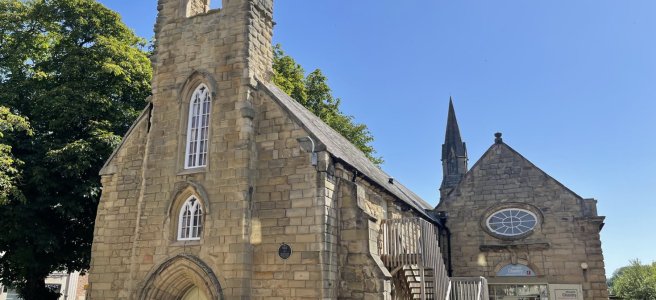
Bridge Street, Morpeth, NE61 1PD. Open Monday – Saturday, 09:30-17:00
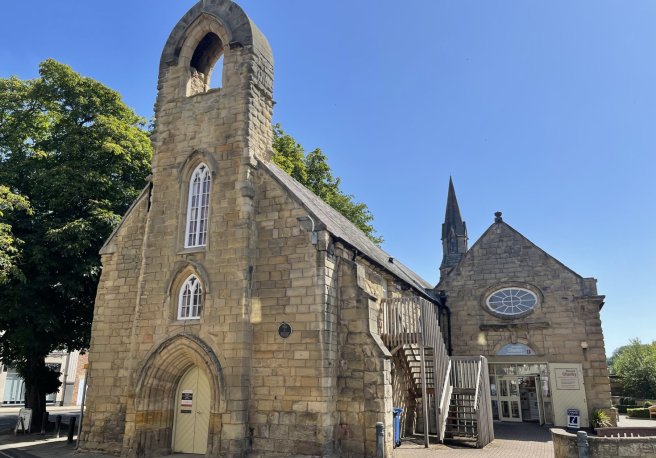
Morpeth Chantry houses the smallest of Northumberland’s museum in the NE Museum portfolio. This medieval building is a rare example of a bridge chapel, built in 1300 with an endowment by Richard of Morpeth to commemorate himself, his parents and benefactors, and the Lord of Morpeth John of Greystock. The priest who served the Chantry would bless the passing traveller, sing masses for the souls of the bridge’s benefactors, collect alms for the upkeep of the bridge and administer the lands with which it was endowed.
The Chantry housed the King Edward VI Grammar School from 1552, its most notable pupil being the priest and natural historian Dr William Turner (1508-1568).
Over the years, the Chantry has served a multitude of functions, including council chamber, a mineral water factory, garage for the High Sherrif’s coach, a gun shop and a ladies’ loo. In view of its special architectural & historic interest the Chantry has Grade1 listed status. The building was restored and refurbished in the 1980s as a Bagpipe Museum, Craft Centre and Tourist Office.
“What is a bagpipe museum doing in an English town centre”? is a frequent question of visitors to Morpeth Chantry.
Outside of the northeast, it is a little-known fact that the bagpipe was once widespread throughout England; Northumberland is the only county in England to retain its own unique musical instrument into modern times. Likewise, the Duke of Northumberland is the last remaining member of the English aristocracy to retain a piper in his establishment to play at important functions.
The museum’s collection is comprises over 150 sets of pipes, with the emphasis on the Northumbrian small pipes and their music, though there are examples of instruments from as far afield as the Czech Republic, India and North Africa. The historic WA Cocks Collection is complemented by the contemporary 1991 Collection. There is a small supplementary archive containing photographs, letters, books, manuscripts and historic ephemera relating to Northumbrian and international music.
Key items in the collection include the Northumbrian small pipes belonging to the 18th century Newcastle Town Wait John Peacock, 17th century French bagpipes from the court of King Louis XIV, and Border pipes dating to the Jacobite rebellion of 1745. Of particular interest to artistically minded visitors, the museum has the delicate ivory & silver Northumbrian pipes which belonged to Robert Elliot Bewick, virtuoso player and son of the great engraver, and an illuminated music book quirkily illustrated in the hand of Joseph Crawhall II.
There are frequent events and musical performances at the museum, in recognition of the fact that the collections themselves no longer speak as musical instruments. One of the galleries can be converted into a reasonably sized concert room, with an audience capacity of up to 60. Indeed, the museum is well known and has adherents throughout the musical world, as evidenced from the Visitors books and Audience Finder surveys.
The museum plays a major role as a supporting venue for the Morpeth Northumbrian Gathering, when it hosts concerts, workshops, talks and education sessions, always on the weekend after Easter. Occasionally, the museum provides space for appropriate non-music events such as participation in Heritage Open Days events and Morpeth’s Poetry and Book Festivals. The Northumbrian Pipers’ Society and the Robson’s Choice pipers meet at the museum several times every month, playing and answering questions for visitors. The venue also hosts seasonal meetings of the Irish Pipers Society.
The Museum has held Full Accredited status with the Arts Council since the scheme started in the 1990s. The collections are provided on loan to the Trust from the Society of Antiquaries of Newcastle upon Tyne and the Trustees of the 1991 collection and contextualised by the Trust’s own collection.
 Friends of the Hatton